Publications
An up-to-date list is available on Google Scholar.
Journal Articles
2025
- MERC GZ #1
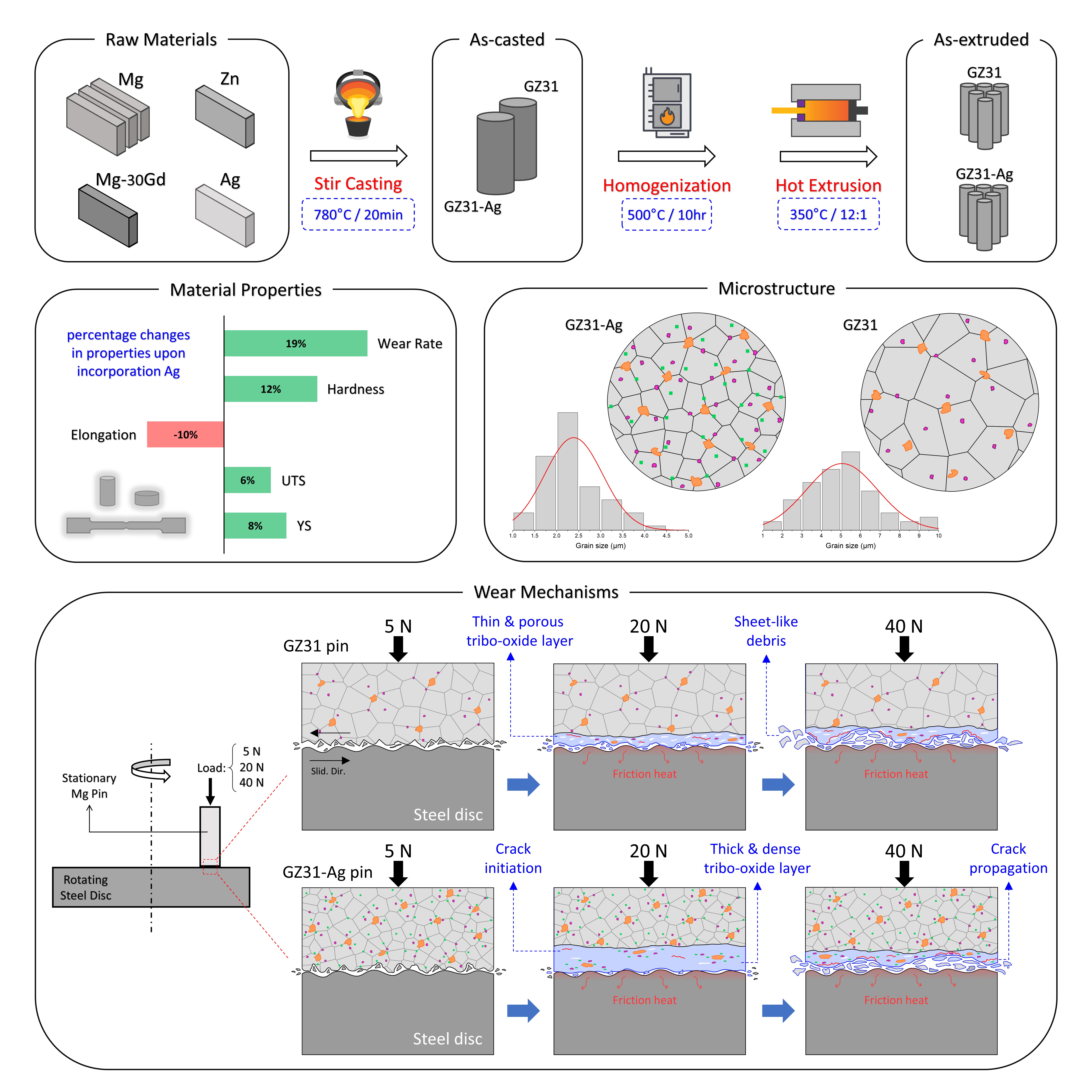 Tailoring mechanical and tribological properties of extruded Mg-Gd-Zn alloy with Ag additionM Ahmadi Nouri, SM Banijamali, H Najafi, and 1 more authorMaterials Today Communications, 2025
In response to the increasing demand for high-performance lightweight magnesium alloys in engineering applications, this research focused on the design and development of a novel quaternary alloy. The effect of adding 1 wt% Ag to the extruded Mg-3Gd-1Zn (GZ31) alloy on its microstructure, mechanical properties, and tribological behavior were thoroughly investigated. A range of advanced characterization techniques, including Optical Microscopy (OM), Scanning Electron Microscopy (SEM), Energy Dispersive Spectroscopy (EDS), X-Ray Diffraction (XRD), and laser profilometry, was utilized to elucidate the microstructural changes caused by Ag addition. The results showed that addition of minor Ag led to a grain refinement from ∼4.7 µm to ∼2.3 µm, along with an increase in the volume fraction of second phase particles, notably the emergence of a new Ag-containing phase. These microstructural modifications directly contributed to enhanced mechanical performance, with hardness, yield strength, and ultimate tensile strength increasing by approximately 12 %, 8 %, and 6 % respectively. Besides, the tribological properties in dry sliding conditions were assessed by a pin-on-disc tribometer in normal loads ranging from 5 to 40 N. The Ag-containing alloy exhibited improved wear resistance, with the wear rate reduced by ∼15 % at 20 N, the most substantial reduction recorded over the tested load range. Moreover, the coefficient of friction decreased across all loads, contributing to overall enhanced tribological performance. The wear mechanisms observed in the studied alloys mainly included abrasive and oxidative wear, along with spallation of the generated tribo-oxide layers under higher loads. Therefore, this study basically highlights the role of processing-induced microstructural changes in tailoring mechanical and tribological properties toward the advancement of high-performance magnesium alloy designs.
@article{ahmadi2025Ag,
  title = {Tailoring mechanical and tribological properties of extruded Mg-Gd-Zn alloy with Ag addition},
  author = {Ahmadi Nouri, M and Banijamali, SM and Najafi, S Saghafian, H and Palizdar, Y},
  journal = {Materials Today Communications},
  volume = {46},
  pages = {112877},
  year = {2025},
  publisher = {Elsevier},
  doi = {10.1016/j.mtcomm.2025.112877},
  dimensions = {true},
}

2023
- KNTU #1
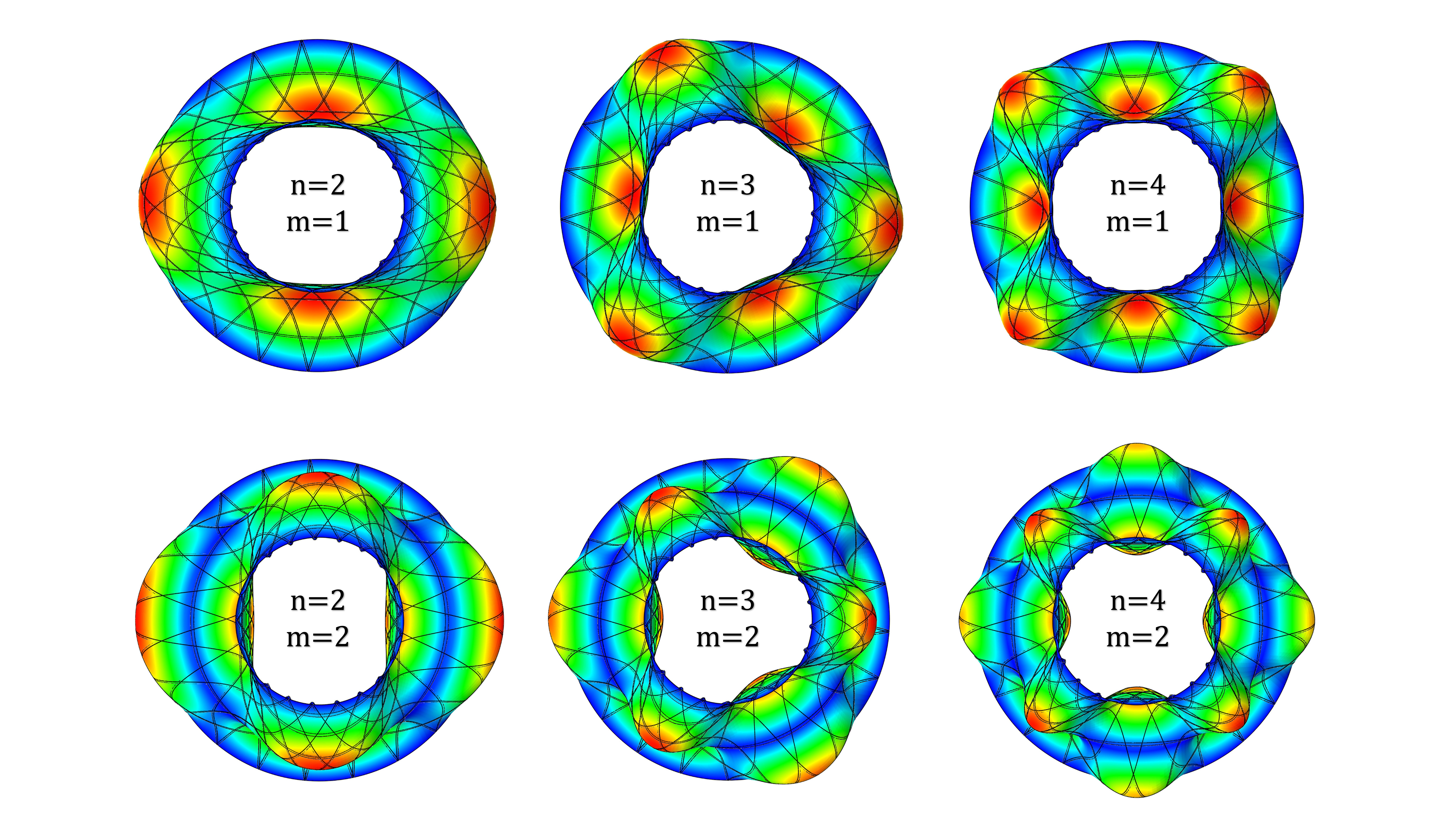 Free Vibration Analysis of Rotating Functionally Graded Conical Shells Reinforced by Anisogrid Lattice StructureSeyed Masih Banijamali, and Ali Asghar JafariMechanics Based Design of Structures and Machines, 2023
This paper investigates the free vibration behavior of a rotating functionally graded conical shell, reinforced by an anisogrid lattice structure. The material properties of the shell are assumed to be graded in the thickness direction. The governing equations have been derived based on classical shell theory and considering the effects of centrifugal and Coriolis accelerations as well as initial hoop tension due to shell rotation. The smeared method is also employed to superimpose the stiffness contribution of the stiffeners with those of the shell to obtain the whole structure’s equivalent stiffness parameters. The resulting equations, which are the coupled set of three variable coefficient partial differential equations in terms of displacement components, are solved by the Galerkin method for different boundary conditions. The obtained frequencies are compared with the available literature and the finite element software results. Finally, new results are discussed to show the effect of various parameters such as shell geometrical and material properties, stiffeners, rotating speed, and boundary conditions on natural frequencies.
@article{banijamali2023CST, title = {Free Vibration Analysis of Rotating Functionally Graded Conical Shells Reinforced by Anisogrid Lattice Structure}, author = {Banijamali, Seyed Masih and Jafari, Ali Asghar}, journal = {Mechanics Based Design of Structures and Machines}, volume = {51}, number = {4}, pages = {1881--1903}, year = {2023}, publisher = {Taylor \& Francis}, doi = {10.1080/15397734.2021.1881539}, dimensions = {true}, } - KNTU #2
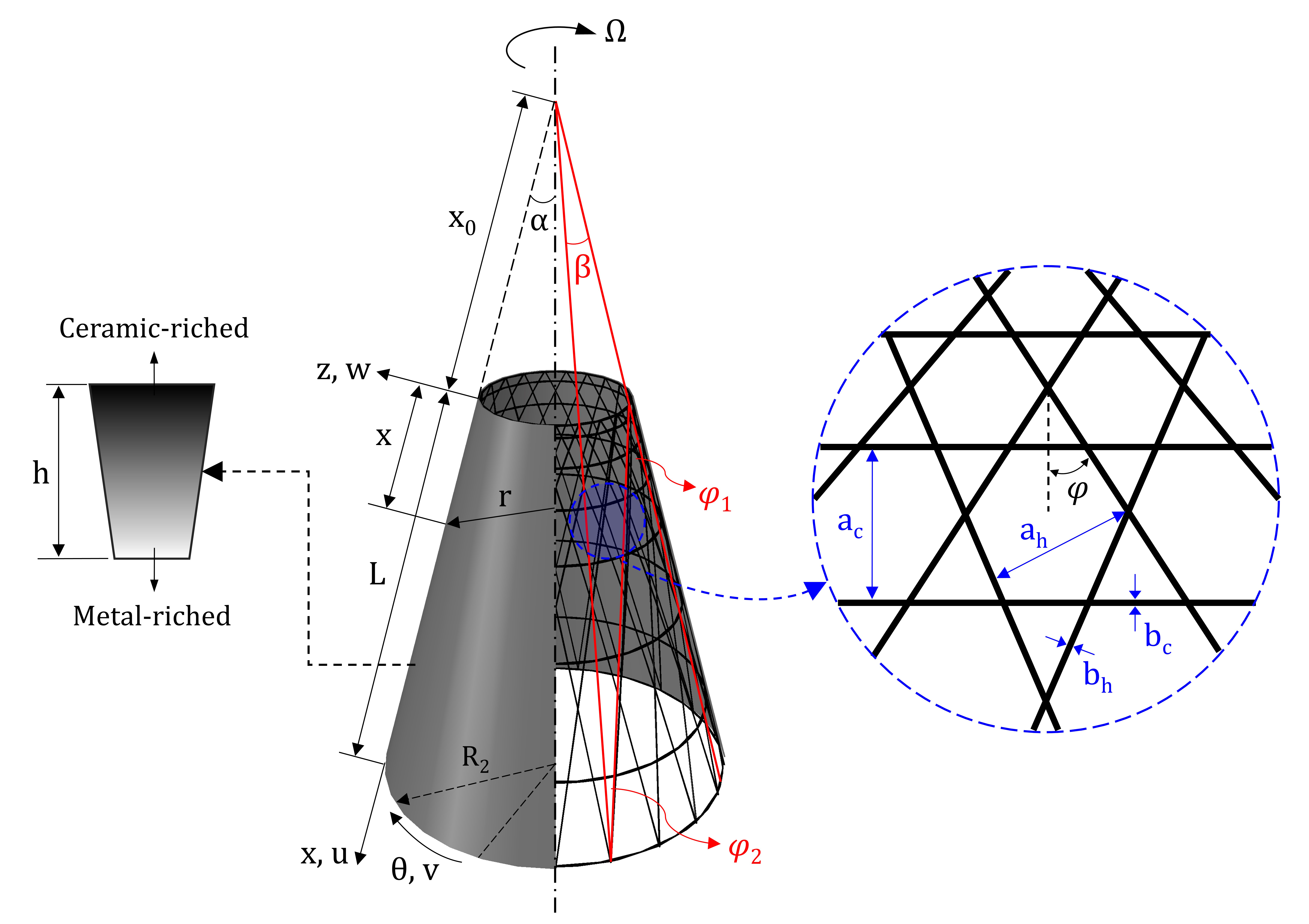 Vibration Analysis and Critical Speeds of a Rotating Functionally Graded Conical Shell Stiffened with Anisogrid Lattice Structure based on FSDTSeyed Masih Banijamali, and Ali Asghar JafariThin-Walled Structures, 2023
The present study explores the frequency characteristics and critical speeds of rotating functionally graded truncated conical shells stiffened by anisogrid lattice structures. The shell and stiffener structures are transformed into an equivalent conical shell with variable stiffness and density using the smeared method. A dynamic model of the rotating equivalent structure is developed based on the first-order shear deformation theory in order to account for the effects of shear deformation and rotational inertia. By taking centrifugal and Coriolis accelerations and initial hoop tension into account, the motion equations with variable coefficients are derived using Hamilton’s principle and then are solved numerically using the generalized differential quadrature method. The obtained results under different conditions are validated by comparing them with existing data in the literature, and reliable precision is observed. A comprehensive parametric study is conducted on the frequencies of backward and forward travelling waves, with a special focus on critical speeds of the proposed conical structure.
@article{banijamali2023FSDT,
  title = {Vibration Analysis and Critical Speeds of a Rotating Functionally Graded Conical Shell Stiffened with Anisogrid Lattice Structure based on FSDT},
  author = {Banijamali, Seyed Masih and Jafari, Ali Asghar},
  journal = {Thin-Walled Structures},
  volume = {188},
  pages = {110841},
  year = {2023},
  publisher = {Elsevier},
  doi = {10.1016/j.tws.2023.110841},
  dimensions = {true},
}


2022
- MERC ZK #3
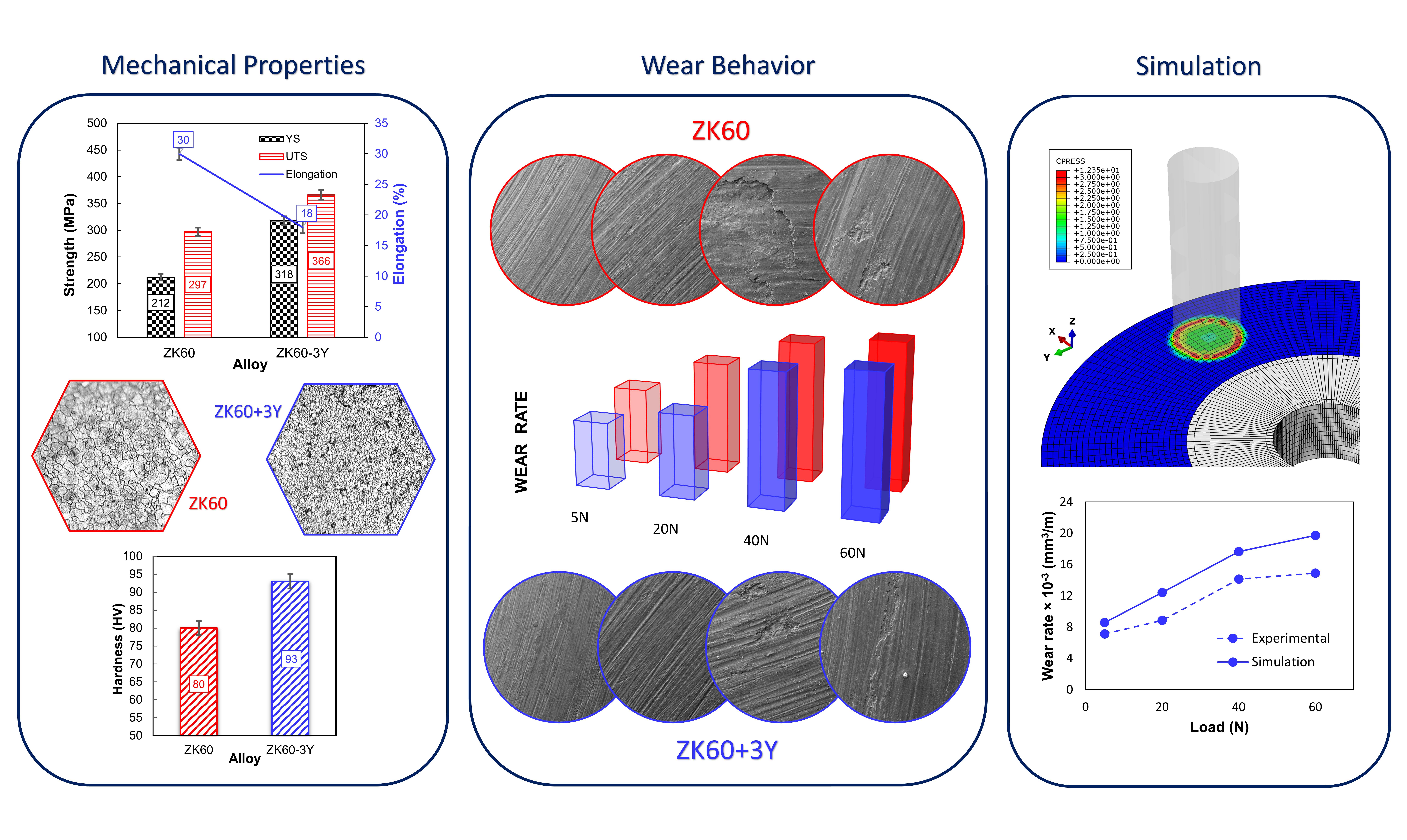 Experimental and Simulation Study on Wear Behavior of ZK60 Alloy with 3 wt.% Yttrium AdditionSM Banijamali, M Shariat Razavi, Y Palizdar, and 3 more authorsJournal of Materials Engineering and Performance, 2022
In this study, the effect of 3 wt.% of Y addition on the wear behavior of ZK60 extruded alloy was investigated using both experiment and simulation. First, a pin-on-disc tribometer was used to test dry sliding wear against an AISI 52100 steel counterface in a load range of 5-60 N. Microstructural study revealed that adding Y to ZK60 alloy resulted in substantial grain refinement and formation of new precipitates. The wear rate and friction coefficient were reduced with Y addition, attributed to the formation of new precipitates and increased hardness. Increasing the normal load resulted in a transition from mild to severe wear. In the mild wear regime, abrasion was the dominant wear mechanism, while in the severe wear regime, oxidative wear and delamination (a sign of spallation of oxidized patches) coexisted with abrasion were dominant mechanisms. Finally, finite element method was employed to model the wear behavior of studied alloys using ABAQUS software. A 3D model was developed to predict the wear depth evaluated from contact pressure, which was then used as an input into Archard’s wear equation. In terms of wear rate, simulation results were in good agreement with experimental values, particularly in the mild wear regime.
@article{banijamali2022simulation, title = {Experimental and Simulation Study on Wear Behavior of ZK60 Alloy with 3 wt.\% Yttrium Addition}, author = {Banijamali, SM and Shariat Razavi, M and Palizdar, Y and Najafi, S and Sheikhani, A and Torkamani, H}, journal = {Journal of Materials Engineering and Performance}, volume = {31}, number = {6}, pages = {4721--4734}, year = {2022}, publisher = {Springer US}, doi = {10.1007/s11665-022-06585-y}, dimensions = {true}, } - MERC WE #1Effect of B4C Reinforcement and Hot Rolling on Microstructure and Mechanical Properties of WE43 Magnesium Matrix CompositeSM Banijamali, Y Palizdar, KhA Nekouee, and 2 more authorsProceedings of the Institution of Mechanical Engineers, Part L: Journal of Materials: Design and Applications, 2022
In this study, WE43 alloy matrix composites, reinforced with 2.5, 5, 7.5, and 10 wt% B₄C particles have been produced by the stir casting technique at 750 °C. Cast ingots of the matrix alloy and the composites were then subjected to hot rolling at 480 °C. After that, the effect of B₄C additions (0–10 wt%) as well as hot rolling on the microstructure and mechanical properties of WE43 alloy were investigated. Microstructural characterization following hot rolling revealed a relatively uniform distribution of B₄C particles, well-bonded B₄C particles to the matrix, and a minimal porosity level. Further, both as-cast and hot-rolled composites have shown considerable grain refinement and hence improved mechanical properties compared to unreinforced alloy. Twinning was the dominant deformation mechanism in the hot-rolled WE43 alloy, whereas dynamic recrystallization occurred extensively in hot-rolled composites. It was observed that tensile strength and hardness values were improved not only as B₄C content increased but more due to the rolling effect; however, elongation to fracture was reduced. Maximum ultimate tensile strength of ∼284 MPa and yield strength of ∼259 MPa with an improved hardness to ∼97 HB were obtained for the hot-rolled WE43-10%B₄C composite.
@article{banijamali2022WE43, title = {Effect of B4C Reinforcement and Hot Rolling on Microstructure and Mechanical Properties of WE43 Magnesium Matrix Composite}, author = {Banijamali, SM and Palizdar, Y and Nekouee, KhA and Najafi, S and Shariat Razavi, M}, journal = {Proceedings of the Institution of Mechanical Engineers, Part L: Journal of Materials: Design and Applications}, volume = {236}, number = {9}, pages = {1854--1868}, year = {2022}, publisher = {SAGE Publications Sage UK}, doi = {10.1177/14644207221085939}, dimensions = {true} } - MERC WE #2Dry Tribological Behavior of Hot-Rolled WE43 Magnesium Matrix Composites Reinforced by B4C ParticlesSM Banijamali, S Najafi, A Sheikhani, and 1 more authorWear, 2022
This study aims to develop a novel hot-rolled WE43-B₄Cₚ composite with improved tribological performance for employment in the automotive industry. The pin-on-disc tribometer was used to evaluate the dry tribological behavior of newly developed composite materials containing (0-10) wt.% B₄C under various applied loads. It was observed that increasing B₄C content reduced the friction coefficient and significantly improved wear resistance in composite samples, especially at higher applied loads. With the addition of 10 wt% B₄C, the wear resistance of WE43 alloy was improved by around 25% at low load and 50% at high load regimes. The surface morphology and topography of the wear tracks were examined to identify the dominant wear mechanisms in each wear condition and reinforcement content. The dominant wear mechanisms at low loads were abrasion and slight oxidation, which were switched to adhesion and delamination as the applied load increased and thus to severe plastic deformation under high loads. The superior wear performance of the hot-rolled WE43-10%B₄Cₚ composite was ascribed to improved hardness and strength, as well as increased work hardening capacity of subsurface due to the presence of hard and thermally stable B₄C particles with uniform dispersion and proper bonding to the matrix.
@article{banijamali2022wear,
  title = {Dry Tribological Behavior of Hot-Rolled WE43 Magnesium Matrix Composites Reinforced by B4C Particles},
  author = {Banijamali, SM and Najafi, S and Sheikhani, A and Palizdar, Y},
  journal = {Wear},
  volume = {508},
  pages = {204487},
  year = {2022},
  publisher = {Elsevier},
  doi = {10.1016/j.wear.2022.204487},
  dimensions = {true},
}

2021
- MERC ZK #1
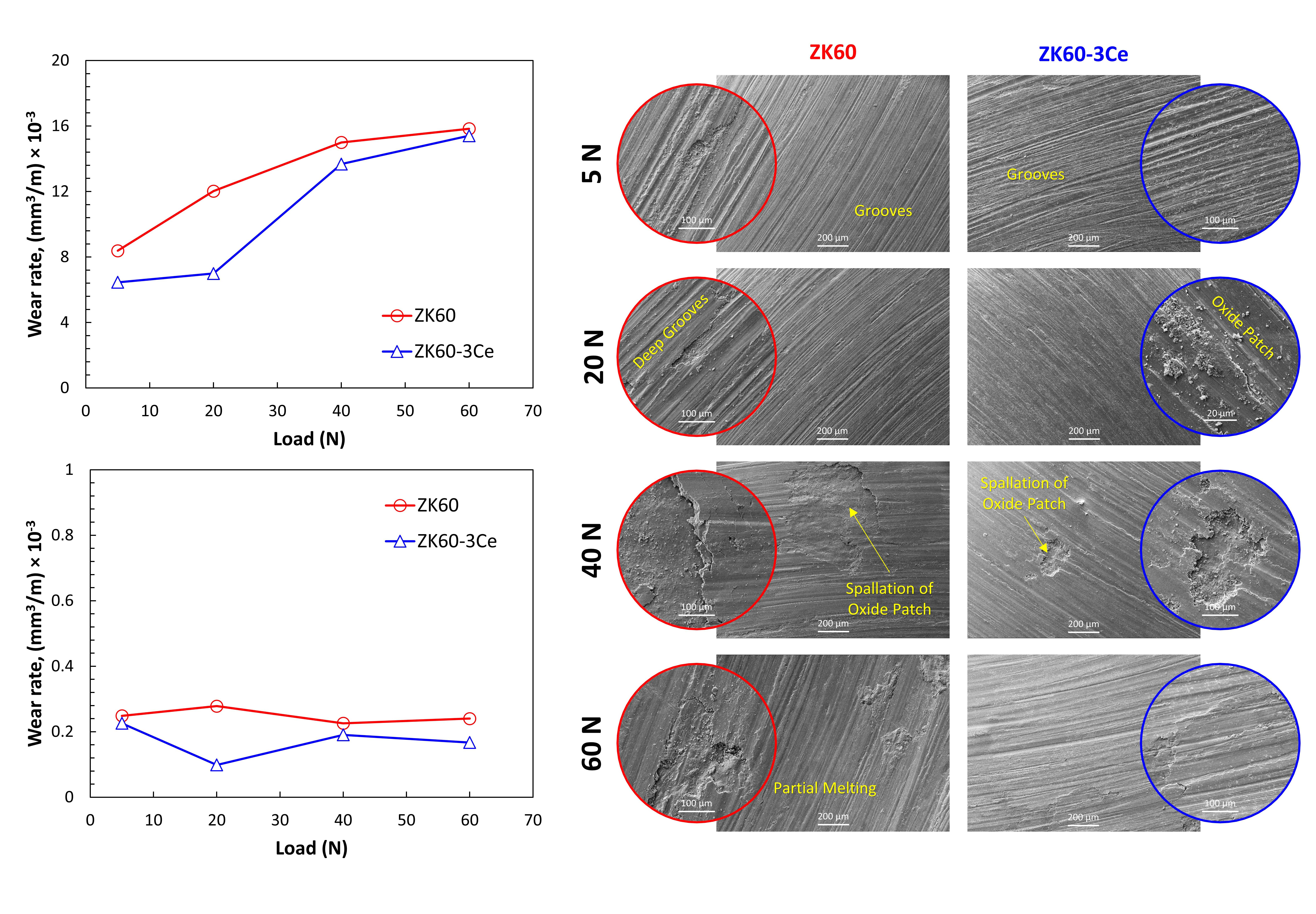 Effect of Ce Addition on the Tribological Behavior of ZK60 Mg-AlloySM Banijamali, Y Palizdar, S Najafi, and 4 more authorsMetals and Materials International, 2021
The present work aims to study the tribological behavior of an extruded ZK60 alloy in the presence of Ce; in a previous study, among ZK60 alloys with different Ce addition rates, an alloy with 3 wt% of Ce was found to exhibit the most promising mechanical (e.g., hardness and strengths) properties, while its wear behavior remained unknown. The results of microstructural examinations by optical and electron microscopes show that Ce addition reduces the grain size from 6.1 to 2.0 μm. Besides, in addition to the precipitates already distributed in the base alloy (Mg₇Zn₃), Ce could promote the formation of a new precipitate (MgZn₂Ce), increasing the total fraction of the precipitates. These microstructural evolutions enhance the strengths of the studied ZK60 alloy, as the yield and tensile strengths increase from 212 to 308 MPa and from 297 to 354 MPa, respectively. A pin on disc tribometer was employed to study the wear behavior of the developed alloy under different normal loads (5, 20, 40, and 60 N). The results show that the base and Ce-added alloys exhibit almost a similar frictional behavior, while the wear resistance of the Ce-added alloy is higher within the load ranges applied: (i) in low load conditions (5 and 20 N), where the abrasive wear is the active mechanism, the precipitates in the Ce-added alloy could enhance the wear resistance. (ii) Under the load of 40 N, oxidative wear is also an operative wear mechanism, leading to a sharp increase in the wear rate of the alloys. In this condition, Ce could provide a protective oxide layer, which could improve the wear resistance of the alloy. (iii) At a load of 60 N, both studied alloys exhibit a similar wear rate due to a severe oxidation condition. Therefore, beyond this loading condition, the microstructural evolutions (e.g., change in precipitation behavior) caused by Ce addition can no longer contribute to the enhancement of wear resistance.
@article{banijamali2021Ce, title = {Effect of Ce Addition on the Tribological Behavior of ZK60 Mg-Alloy}, author = {Banijamali, SM and Palizdar, Y and Najafi, S and Sheikhani, A and Soltan Ali Nezhad, M and Valizadeh Moghaddam, P and Torkamani, H}, journal = {Metals and Materials International}, volume = {27}, pages = {2732--2742}, year = {2021}, publisher = {The Korean Institute of Metals and Materials}, doi = {10.1007/s12540-020-00832-4}, dimensions = {true}, } - MERC ZK #2The Effect of Y Addition on the Microstructure and Work Hardening Behavior of Mg-Zn-Zr AlloysS Najafi, Y Palizdar, A Sheikhani, and 4 more authorsJournal of Materials Engineering and Performance, 2021
The effect of adding different amounts of Y on the microstructure, mechanical properties, texture and work hardening behavior of the extruded Mg-6Zn-0.5Zr-xY alloys (x = 0, 1, 2, 3 wt.%) was investigated. According to the results, the microstructure of all alloys is composed of α-Mg grains and Mg₇Zn₃ particles. By adding Y, in addition to grain refinement, Mg₂₄Y₅ and Mg₃Y₂Zn₃ particles are formed in the microstructure. Among the alloys studied, the ZK60-3Y alloy has the highest strengths, as the yield stress and ultimate tensile strength of 318 and 366 MPa, respectively, were obtained for that alloy. This is due to the finer grains and higher volume fraction of the particles in the ZK60-3Y alloy. Meanwhile, reducing the grain size by Y addition affects the work hardening behavior; Y addition reduces the saturation stress, hardening capacity, and work hardening exponent by increasing the dynamic recovery; i.e., the more Y is added, the greater is the drop in the work hardening parameters. The effects of Y addition on work hardening behavior and dynamic recovery were investigated by examining microstructural developments, the volume fraction of particles and texture evaluation. The results of the texture evaluations showed that the addition of Y changes the texture component and intensity of the basal planes and can cause work hardening loss by activating slip on the non-basal planes.
@article{najafi2021WH,
  title = {The Effect of Y Addition on the Microstructure and Work Hardening Behavior of Mg-Zn-Zr Alloys},
  author = {Najafi, S and Palizdar, Y and Sheikhani, A and Soltan Ali Nezhad, M and Abdiyan, F and Banijamali, SM and Torkamani, H},
  journal = {Journal of Materials Engineering and Performance},
  volume = {30},
  pages = {2574--2585},
  year = {2021},
  publisher = {Springer US},
  doi = {10.1007/s11665-021-05592-9},
  dimensions = {true}
}

Theses
2019
- MSc Thesis
 Free Vibration Analysis of Rotating FGM Truncated Conical Shells Reinforced by Grid StiffenersSeyed Masih Banijamali2019

2015
- BSc Thesis
 Modelling of Residual Stress and Plastic Strain in a Cantilever Beam under Bending Fatigue Loading by ABAQUS SoftwareSeyed Masih Banijamali2015
